September 4–8, 2025 · Paris
I care about the room I’m sitting in rather more than is strictly reasonable. Not in a show-home way; I’ve no interest in a space that looks immaculate and feels like nobody’s allowed to live in it, but because home is where I actually spend my life, and I’d like my life to have a lovely backdrop. So a city that takes that instinct seriously, twice a year, was always going to have my heart.
That city is Paris, and the occasion is Maison & Objet, one of the world’s great home-and-interiors fairs, which each September pairs up with the city-wide Paris Design Week to turn the whole capital into a conversation about how we live. The scale is genuinely impressive: some 70,000 visitors, around 40% of them from abroad, and a couple of thousand brands spread across six sections, from décor to craft to fragrance. But the numbers aren’t really the point. What lifts this above a glorified shopping catalogue is that it treats design as the cultural question, not a purchase order.
The fair and the city
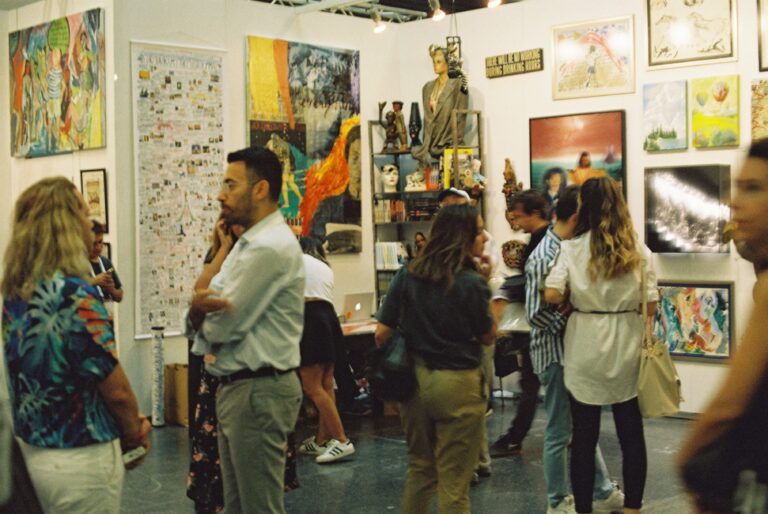
A useful distinction, if you’re tempted to book a flight. Maison & Objet itself is held out at the Villepinte exhibition centre on the edge of the city; like most serious trade fairs, it’s for the professionals: buyers, designers, the people who decide what will be in the shops next year. But Paris Design Week, running at the same time, is the public’s glorious way in: free exhibitions and installations spilling across hundreds of venues in the actual city galleries, showrooms, heritage buildings, concept stores, from the Marais to the Rive Gauche. You don’t need a trade badge to wander into those. You need comfortable shoes and a free afternoon.
This year’s fair took its cue from a theme called Welcome Home, under the artistic direction of the designer Amélie Pichard, who reframed the whole thing as something to be experienced rather than merely browsed, rooms staged as living installations rather than sterile display stands. Around twenty talks ran alongside, on everything from material innovation and sustainability to the future of craft and the awkward new question of what AI means for design. And, as ever, the fair made real room for newcomers: platforms like Future On Stage for first-time designers, the Factory programmes championing young and crowdfunded brands, and this year’s Rising Talent Awards turning their spotlight on Germany.
What ‘home’ means now
The Welcome Home theme was cannier than it first sounds. Our relationship with domestic space has quietly transformed in recent years: the home, the office, the gym, the sanctuary and retreat all at once, and it hasn’t entirely handed those roles back. So the interesting conversation at Paris this year wasn’t “what’s the fashionable colour” but something closer to “what do we actually need a home to do for us now, and how does design answer that?” It’s a rare fair that asks a question worth sitting with on the train home.
The poetics of a room
Which is where a slim, beautiful old book earns its place on the shelf. In 1958, the French philosopher Gaston Bachelard wrote The Poetics of Space, arguing that a house is never merely a container for a body; it’s the topography of our inmost life, the place where memory, daydream and intimacy are actually stored. The corner you read in, the kitchen where everyone somehow gathers, the drawer you can’t bear to tidy: these aren’t décor, they’re you, externalised. Seen through Bachelard’s eyes, a fair like this one stops being about sofas and becomes something rather profound: that deliberate shaping of spaces that, in turn, quietly shape us. Buy the cushion if you like it. But know that you’re really furnishing an inner life.
Should you go?
Honestly? If you love this sort of thing, yes, with the caveat above. Treat the trade fair as the professionals’ engine room and Paris Design Week as your own free, city-wide gallery, and you get the best of both: the ideas and the wander. And Paris in early September is one of the great pleasures on earth: the light softening, the crowds thinning, the whole city seeming to exhale. Aligning a trip with Design Week means the event isn’t in one building; it’s the entire city, and much of it costs nothing but attention.
How I read it
I came away with the same quiet conviction I always circle back to: a home should hold a life, not impress a guest. The most beautiful rooms I’ve ever been in weren’t the most expensive; they were the most intentional, assembled slowly by someone who knew exactly why each thing was there. That’s the real luxury on offer here, and it has nothing to do with a price tag: the permission to be deliberate about where you live and generous with yourself, making it feel like yours. It’s the same unhurried, choose-it-because-you-love-it instinct I bring to building a home worth coming back to. Wander the city, gather ideas, and take home only what you’d genuinely miss.
As a thought, a look at a beautiful corner of the design world- not professional advice, but what you make of your own four walls is gloriously, entirely yours.
The Jacqueline Brand — knowledge builds confidence, and confidence builds wealth. This is editorial commentary for information and education only. It is not financial, investment or professional advice, and nothing here is a recommendation to buy or sell any investment. The Jacqueline Brand is not authorised or regulated by the Financial Conduct Authority. The value of investments can fall as well as rise, and past performance is not a guide to future returns. Figures were correct at the time of publication. Always do your own research and consider speaking to a regulated adviser. Where cryptoassets are discussed, they are high risk and largely unregulated in the UK, and you could lose all the money you invest. The Collection
© 2026 TheJacquelineBrand. All rights reserved. Please do not reproduce or republish without written permission.