February 11–14, 2025 · Messe Nuremberg, Germany
I have a small, faintly antisocial habit: in a shop, I read the back of the jar before I read the front. The front is where the poetry lives botanical, clean, derived from nature, words chosen by someone paid handsomely to make me feel virtuous. The back is where the truth is kept, in smaller print, and usually less flattering. So a trade fair built entirely around what’s actually in the jar was always going to be my kind of pilgrimage.
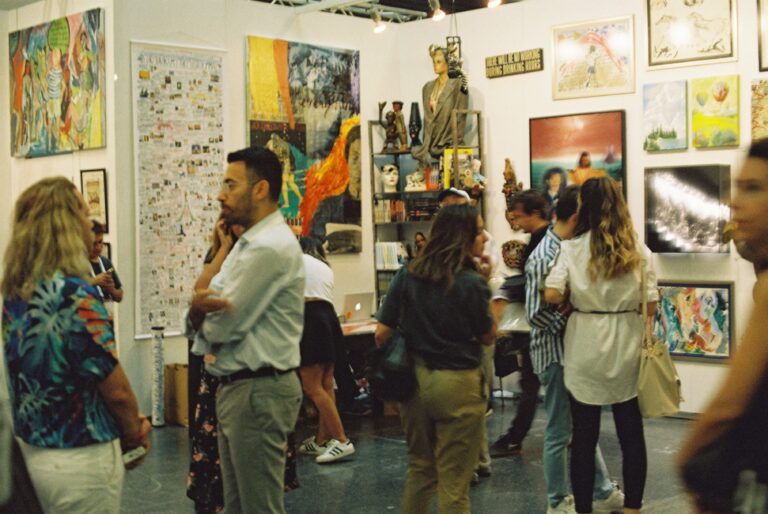
That fair is BIOFACH the world’s leading trade fair for organic food, and in February it turns Nuremberg into the global town square for anyone serious about conscious, sustainable living. This year drew over 35,000 visitors from 140 countries and around 2,300 exhibitors from 94, for four days of the kind of concentrated, unglamorous expertise that never makes the headlines but quietly shapes what ends up on your shelves.
One conversation, not two
The most telling thing about 2025 wasn’t a product. It was a merger. Vivaness, the natural cosmetics and personal-care showcase that had run alongside BIOFACH as its own event since 2007, was folded back into the main fair. On paper, a hall reshuffle. In spirit, a quiet admission of something I’ve long felt to be obvious: what you eat and what you put on your body are not two separate subjects politely sharing a building. They’re one conversation. The same questions where did this come from, what’s really in it, who checked apply whether you’re swallowing it or smoothing it into your skin. Putting the tomatoes and the face oil under one roof stopped pretending otherwise.
The most overused word in the shop
Which brings us to the word doing the heaviest lifting and the least honest work in modern retail: natural. It means almost nothing. A great deal of BIOFACH’s considerable energy goes into the unglamorous business of separating genuine integrity from a nicely designed label, through certification standards most shoppers have never heard of but quietly rely on: EU Organic and IFOAM’s international guidelines for food, COSMOS and NATRUE for cosmetics. The sessions on greenwashing weren’t there to be worthy. They were there because “natural” on the front and a certification seal on the back can tell you two completely different stories, and only one of them is enforceable.
Why does the little seal exist
Here’s the idea that turns all this from worthy to genuinely interesting. Back in 1970, the economist George Akerlof wrote a now-famous paper about “the market for lemons”, his point being that when the buyer can’t tell the good stuff from the rubbish, the whole market suffers, because honesty stops paying. You can’t tell a scrupulously sourced organic serum from a cynical one by staring at the jar; the marketing is designed precisely so you can’t. Certification exists to fix exactly that gap; it’s a trust machine, a way for the honest producer to prove what the dishonest one can only claim. That little seal isn’t decoration. It’s the closest thing the shelf has to a lie detector. Once you see it that way, reading labels stops feeling fussy and starts feeling like self-defence.
Should you go?
Now, a note of honesty, since I’d hate to send you to the airport in error: BIOFACH is a trade fair, open to the industry rather than the browsing public, so this isn’t a weekend jaunt unless you’ve a professional reason and a badge to match. If you’re in the business a formulator, a buyer, a maker it’s simply the most concentrated education available anywhere, wrapped in a genuinely lovely host city with a serious food culture of its own, in the calm of February before the tourists descend. And if you’re the rest of us, reading the back of the jar at home? The gift of an event like this is second-hand but real: it’s the reason those certifications on your shelf mean something, and the reason it’s worth learning to spot them.
How I read it
I’ll admit my bias cheerfully: I’d rather own fewer, better things and understand every one of them than fill a cabinet with pretty promises. That’s not about spending more; it’s about spending on purpose, which is a different and far more satisfying discipline. Reading the back of the jar is a tiny act of exactly that: paying attention on your own behalf, refusing to be flattered into a purchase, buying fewer things but choosing them well. The industry behind your products is vast and, mostly, invisible. A little curiosity about it is one of the cheapest luxuries there is.
This is me, thinking out loud in your company, looking at an industry, not medical or professional advice. What you keep in your cupboards is gloriously your own business.
The Jacqueline Brand — knowledge builds confidence, and confidence builds wealth. This is editorial commentary for information and education only. It is not financial, investment or professional advice, and nothing here is a recommendation to buy or sell any investment. The Jacqueline Brand is not authorised or regulated by the Financial Conduct Authority. The value of investments can fall as well as rise, and past performance is not a guide to future returns. Figures were correct at the time of publication. Always do your own research and consider speaking to a regulated adviser. Where cryptoassets are discussed, they are high risk and largely unregulated in the UK, and you could lose all the money you invest. The Collection
© 2026 TheJacquelineBrand. All rights reserved. Please do not reproduce or republish without written permission.