June 20–22, 2025 · Aspen, Colorado
Here is a fact nobody warns you about: Aspen sits at nearly 8,000 feet, and wine at altitude is a considerably more persuasive companion than wine at sea level. The Rocky Mountains will, quite politely, take one glass and charge you for two. Which makes the Food & Wine Classic three days of tasting, learning and mountain air a festival that rewards the pacing of a marathon rather than the enthusiasm of a sprint.
I mention it because it captures what I love about this event. Everything here is a little more intense than you expect, including the education. Now in its 42nd year, the Classic in Aspen is routinely called America’s most prestigious culinary gathering and calling it a food festival would actually undersell what goes on.
Not a festival. A seminar with better catering.
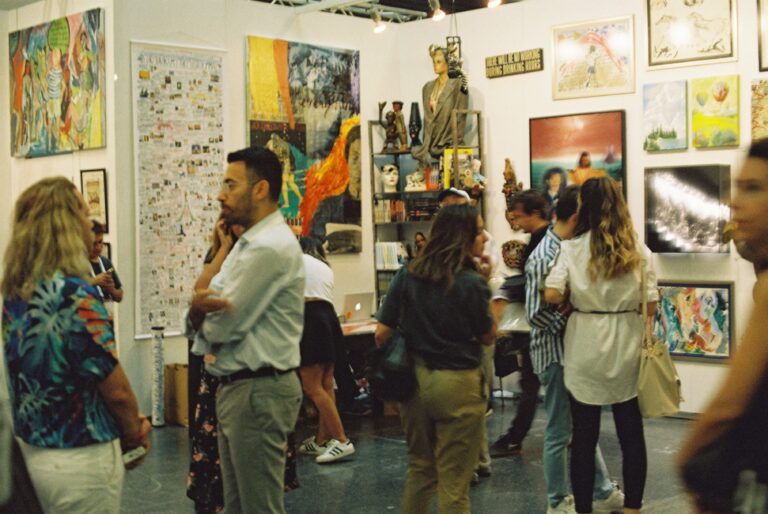
Strip away the mountain glamour, and what you find is a school. Over the weekend, there are some eighty cooking demonstrations, wine seminars, spirits tastings, and panel discussions, plus five Grand Tastings in a pavilion in Wagner Park, where more than 150 winemakers, chefs, and distillers set out their wares beneath Aspen Mountain.
The distinction I’d draw is this: the best sessions teach a principle, not a recipe. A demonstration that shows you how to make one dish gives you one dinner. A demonstration that explains why the technique works gives you a hundred. Likewise, a good tasting isn’t about memorising the tasting note vocabulary all that leather and cassis and wet stone an act of theatre I’ve never fully forgiven the wine world for. It’s about building a framework, so you can taste something entirely new, roughly where it fits and why you do or don’t like it. Confidence, in other words, rather than performance. That’s the whole gift of the thing.
Place in a glass
Which brings me to the idea underneath all of it. The French have a word, terroir, for the notion that a wine tastes of somewhere: the soil, the slope, the weather, the particular tilt of a hillside toward the afternoon sun. Two winemakers can do everything the same and produce entirely different bottles because the ground disagreed with them. It’s a lovely, slightly stubborn idea, because it insists that place is an ingredient that you cannot separate the thing from where it came from.
Once you accept that, provenance stops being marketing and becomes information. Asking where the lamb was raised or which hillside grew the grapes isn’t fussiness; it’s the shortest route to understanding what’s actually in front of you. And it’s why an event like this puts producers in front of you to talk rather than merely sell the story is not decoration on top of the flavour. Increasingly, it is the flavour: sustainability, sourcing, the changing bargain between chefs and the farmers who feed them. All of it turns up in the glass, eventually.
The bit the brochures skim over
I’d be a poor friend if I painted this as an easy weekend away, so let’s be practical. The Classic is emphatically a premium event: passes run into the thousands of dollars, they sell out months ahead, sometimes by January, and everyone attending must be 21 or over. Aspen in June is no bargain either. Some of the proceeds do genuine good; the festival supports the Southern Smoke Foundation, which provides emergency relief to food and drink industry workers, and No Kid Hungry. That’s a worthy thing, and it doesn’t make the ticket cheap.
So: worth it, if this is your particular passion and the budget is there. And Aspen in late June is undeniably spectacular hiking, wildflowers, thin bright air, a town that does luxury with unusual intelligence and restraint. Stitch two or three mountain days onto the weekend, and you have a proper trip rather than a rushed event. If it isn’t your budget, the consolation is real: Everything the Classic teaches taste attentively, ask where it came from, understand the principle rather than the recipe costs nothing at your own kitchen table.
How I read it
I’ve never much wanted a cellar full of trophy bottles. What I want is to understand what I’m drinking and eating, and to share it slowly with people I love; that’s the entire return on this kind of education, and it compounds beautifully. Knowledge turns an expensive bottle into an interesting one, and an ordinary Tuesday supper into something quietly memorable. It’s the reason I’d always rather spend on an experience than an object; the case of wine we drink, and the meal ends, but knowing why it was good stays with you for good. Go if you can. Learn the principle either way. And pace yourself at altitude.
This is me thinking out loud in your company, a look at a beautiful corner of the food world, not professional advice. Please enjoy the good stuff responsibly, and mostly in good company.
The Jacqueline Brand — knowledge builds confidence, and confidence builds wealth. This is editorial commentary for information and education only. It is not financial, investment or professional advice, and nothing here is a recommendation to buy or sell any investment. The Jacqueline Brand is not authorised or regulated by the Financial Conduct Authority. The value of investments can fall as well as rise, and past performance is not a guide to future returns. Figures were correct at the time of publication. Always do your own research and consider speaking to a regulated adviser. Where cryptoassets are discussed, they are high risk and largely unregulated in the UK, and you could lose all the money you invest. The Collection
© 2026 TheJacquelineBrand. All rights reserved. Please do not reproduce or republish without written permission.